
Introduction: The Strategic Imperative of Offshore Development for Modern Agencies
Digital agencies across the United States, United Kingdom, Canada, Australia, and New Zealand face an increasingly complex challenge: delivering exceptional client work while managing escalating operational costs and talent shortages. According to recent McKinsey research, 60% of companies identify the scarcity of tech talent as a key inhibitor of digital transformation, with 74% of employers reporting difficulty finding skilled professionals.
Enter the offshore web development partner—no longer simply a cost-cutting measure, but a strategic enabler that transforms how agencies scale, innovate, and compete. The global offshore development market, valued at approximately $160.9 billion in 2024, is projected to more than double to $413 billion by 2033, growing at a compound annual growth rate of 11.04%. This explosive growth reflects a fundamental shift: agencies aren’t just offshoring to save money; they’re doing it to access specialized expertise, accelerate time-to-market, and build sustainable competitive advantages.
For Western agencies, particularly those serving high-value clients in sectors like fintech, healthcare, e-commerce, and SaaS, the decision to partner with an offshore dev partner represents more than operational efficiency—it’s about survival and growth in an increasingly competitive marketplace.
Why Digital Agencies Are Embracing Offshore Development Partnerships
The Economic Reality: Cost Efficiency Without Quality Compromise
The financial advantages of partnering with an offshore web development partner for agencies are substantial and well-documented. Organizations implementing strategic offshore models achieve annual cost savings between 40-60%, with optimized partnerships reaching savings as high as 68% according to Deloitte’s 2025 Global Outsourcing Survey.
Consider the stark cost comparisons:
- United States: Senior developers command $120,000-$180,000 annually ($60-$90/hour)
- Western Europe: Development costs range from $80,000-$140,000 annually ($40-$70/hour)
- India: Comparable talent available at $30,000-$60,000 annually ($15-$30/hour)
- Eastern Europe: Mid-range at $50,000-$90,000 annually ($25-$45/hour)
For a typical agency maintaining a team of 10-15 developers, these differences translate to $800,000-$1.8 million in annual savings—capital that can be reinvested in business development, marketing, or expanding service offerings.
But the conversation has evolved beyond simple arbitrage. As Glassdoor reports indicate, in-house web developers in the United States cost agencies approximately $90,000 per year in salary alone, before accounting for benefits, office space, equipment, and administrative overhead. An offshore white label agency partnership eliminates these ancillary costs entirely, with the provider handling recruitment, HR, payroll, infrastructure, and compliance.
Access to Specialized Global Talent
The technical talent landscape has become increasingly specialized. Modern client projects demand expertise in AI/ML integration, blockchain development, cloud-native architectures, progressive web applications, and complex API ecosystems. Finding developers who possess these niche skills locally—particularly in smaller markets—has become nearly impossible.
India alone produces over 5.8 million developers, with hundreds of thousands entering the workforce annually from premier institutions like IITs, NITs, and specialized technology universities. This vast talent pool ensures agencies can access developers proficient in:
- Advanced frameworks: React, Angular, Vue.js, Next.js, Node.js, Laravel, Django
- Emerging technologies: AI/ML, blockchain, IoT, cloud computing (AWS, Azure, GCP)
- Enterprise solutions: Custom ERP, CRM integration, legacy system modernization
- E-commerce platforms: Magento, Shopify, WooCommerce, custom builds
According to industry data, 75% of Indian offshore development firms have integrated AI capabilities by the end of 2025, with 55% of new technology contracts involving AI-driven projects. This positions offshore partners not as commodity providers, but as innovation accelerators.
24/7 Development Cycles and Faster Time-to-Market
Time zone differences—often perceived as challenges—actually create strategic advantages when properly managed. An agency headquartered in New York can hand off work to their offshore team in India at the end of their business day, effectively creating a “follow-the-sun” development model where progress continues around the clock.
Real-world results demonstrate the impact:
- Healthcare SaaS company: Increased project velocity by 40% using 24/7 development cycles across time zones
- FinTech startup: Scaled from 5 to 25 developers in 3 months while maintaining code quality standards
- E-commerce platform: Reduced feature development costs from $250,000 to $95,000 per quarter while launching 3x more features
Scalability and Operational Flexibility
Traditional hiring models lock agencies into long-term commitments. The offshore development model offers unprecedented flexibility to scale teams up or down based on project demands, seasonal variations, or strategic pivots.
Need to add five React developers for a three-month sprint? An offshore web development partner for agencies can provision talent within 7-14 days. Project complete and team requirements reduced? Scale down without severance costs, HR complications, or morale impacts on core staff.
This elasticity proves particularly valuable for:
- Growing agencies: Handling project overflow without permanent headcount increases
- Specialized projects: Accessing niche expertise (blockchain developers, AI specialists) for specific client engagements
- Seasonal variations: Accommodating peak periods without maintaining excess capacity year-round
Testing new services: Experimenting with new offering areas before committing to full-time hires
Understanding Different Offshore Partnership Models
Not all offshore arrangements are created equal. Understanding the various engagement models helps agencies select the structure that best aligns with their operational needs and client service approach.
White Label Development Services
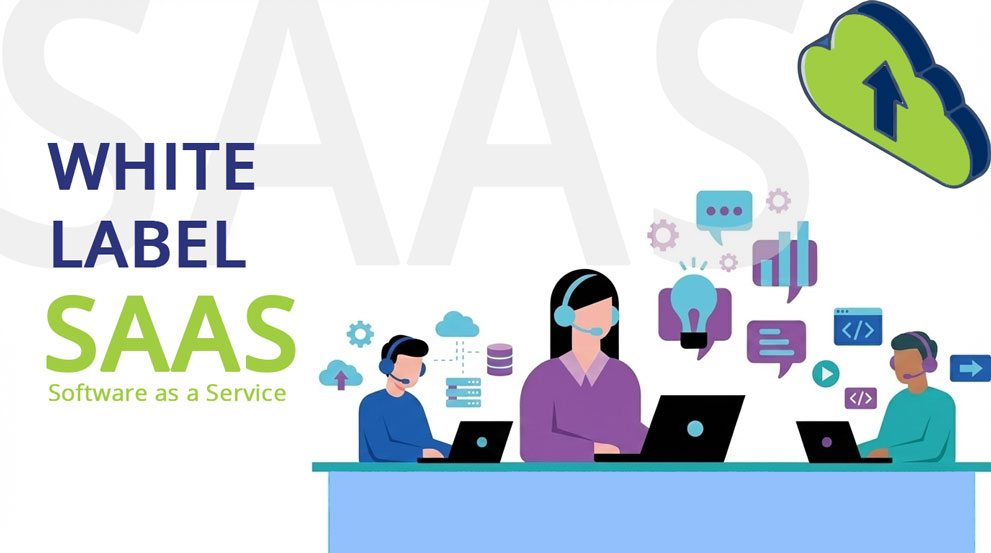
The offshore white label agency model has become the preferred choice for digital agencies looking to expand service capabilities while maintaining brand consistency. In this arrangement, the offshore partner operates completely behind the scenes, executing work that’s delivered under your agency’s brand.
Key characteristics:
- Complete brand invisibility: All deliverables, communications, and reports carry your agency branding
- Client relationship preservation: Your agency maintains direct client relationships; offshore team remains anonymous
- Service expansion: Offer comprehensive development services without building internal capacity
- Flexible engagement: Scale services based on client demand without long-term commitments
White label partnerships work particularly well for agencies that:
- Focus on strategy, design, and client relationship management
- Need development capacity without internal technical management
- Want to offer full-stack services across diverse technology stacks
- Serve clients who prefer working with domestic agencies
Bantech Solutions exemplifies this model, providing white-label web development services that allow Western agencies to deliver PHP, Node.js, React, and custom application development under their own brand while maintaining complete control over client relationships.
Dedicated Development Team Model
This model provides agencies with a team of developers who work exclusively on their projects, functioning as a remote extension of the in-house team. Unlike white label arrangements, the agency has direct interaction with individual developers.
Advantages:
- Team continuity: Same developers work on your projects long-term, building deep product knowledge
- Direct management: Agency retains control over daily workflows, priorities, and methodologies
- Cultural integration: Developers adopt your agency’s processes, communication styles, and quality standards
- Knowledge retention: Institutional knowledge remains with your extended team
This model suits agencies that:
- Maintain multiple ongoing client projects requiring dedicated capacity
- Have strong internal technical leadership and project management
- Value deep integration between offshore and onshore teams
- Need consistent availability of specific skill sets
Staff Augmentation

The most flexible model, staff augmentation allows agencies to temporarily add specific developers to their team for defined periods or projects. Think of it as flexible capacity-on-demand.
When staff augmentation makes sense:
- Short-term projects requiring specialized skills (3-6 month engagements)
- Seasonal demand fluctuations requiring temporary capacity
- Specific skill gaps in current team composition
- Testing offshore collaboration before committing to larger partnerships
Project-Based Outsourcing
Traditional project outsourcing involves handing off complete projects to an offshore partner who manages the entire development lifecycle from requirements to deployment.
Best for:
- Well-defined projects with clear specifications
- Agencies without internal technical management capacity
- One-off client projects outside core service areas
- Situations where agencies can provide comprehensive documentation upfront
Why India Remains the Premier Destination for Offshore Development Partnerships
The Indian IT Advantage: Beyond Cost Arbitrage
While cost efficiency initially attracted global businesses to India, the country has evolved into a comprehensive technology ecosystem that offers strategic value far beyond labor cost advantages. According to Nasscom projections, India’s IT services sector is forecasted to reach $254 billion in 2025, with IT exports surpassing $224 billion—a 4.6% year-over-year increase reflecting sustained global reliance on Indian development capabilities.
Unmatched Talent Density and Technical Excellence
India’s higher education system produces approximately 1.5 million engineering graduates annually, with specialized technology programs at institutions like the Indian Institutes of Technology (IITs), National Institutes of Technology (NITs), and thousands of engineering colleges nationwide.
This creates several compounding advantages:
Deep Technical Expertise: Indian developers routinely work with Fortune 500 companies, gaining exposure to enterprise-grade architecture, security practices, and scalability challenges. Many offshore development firms in India employ engineers who previously worked for global tech giants (Microsoft, Google, Amazon, IBM) and bring that institutional knowledge to client projects.
English Language Proficiency: As one of India’s official languages, English proficiency among technical professionals is exceptionally high. This eliminates communication barriers that plague offshore partnerships in other regions, ensuring clear requirements gathering, status updates, and collaborative problem-solving.
Global Standards Adherence: Indian development firms follow international standards including Agile, Scrum, ISO 9001, ISO 27001, CMMI, SOC 2, and industry-specific compliance frameworks (HIPAA for healthcare, PCI DSS for payments, GDPR for European projects).
Mature IT Infrastructure and Supportive Ecosystem
India’s technology infrastructure has matured significantly over the past two decades. Major cities like Bangalore, Hyderabad, Pune, Chennai, and Mumbai feature:
- Reliable connectivity: High-speed internet infrastructure with redundancy
- Software Technology Parks: Government-supported IT hubs with tax incentives and infrastructure
- Collaborative ecosystems: Dense networks of technology companies fostering innovation and knowledge sharing
- Time-tested operations: Decades of experience managing complex global client relationships
Specialization in Emerging Technologies
Indian offshore development companies lead in emerging technology adoption:
- AI/ML Integration: 75% of Indian firms integrated AI capabilities by the end of 2025, with expertise in natural language processing, computer vision, and predictive analytics
- Cloud-Native Development: 62% adoption of hybrid cloud strategies, with deep expertise in AWS, Azure, and Google Cloud Platform
- Blockchain and DeFi: Growing specialization in smart contract development, NFT platforms, and decentralized applications
- DevOps and CI/CD: Advanced implementation of containerization (Docker, Kubernetes), automated testing, and continuous deployment pipelines
The Bantech Solutions Advantage
While India offers abundant options, not all offshore partners deliver equal value. Bantech Solutions stands out by combining India’s cost advantages with hybrid operational excellence tailored specifically for Western agencies.
Proven Track Record: With 300+ solutions designed and delivered across 20+ business domains and 100+ legacy systems re-engineered, Bantech brings battle-tested experience to every engagement.
Comprehensive Service Portfolio:
- Enterprise Software Development: Custom web applications using PHP, Laravel, Node.js, React, and modern JavaScript frameworks
- AI and Machine Learning Solutions: Custom AI development, NLP, computer vision, and intelligent automation
- Blockchain and NFT Development: Smart contracts, DeFi platforms, and tokenization services
- Post-Deployment Support: 24/7 maintenance, bug fixes, security updates, and ongoing optimization
Client-Centric Approach: Testimonials consistently highlight Bantech’s professionalism, reliability, and ability to function as a “white-labeled back-office” that makes agency operations possible. This partnership mentality—rather than vendor mentality—creates the foundation for long-term success.
How to Evaluate and Select the Right Offshore Web Development Partner for Agencies
Essential Evaluation Criteria
Selecting an offshore dev partner requires methodical evaluation across multiple dimensions. Agencies should never rely solely on cost comparisons or marketing claims. Instead, implement a comprehensive vetting framework:
1. Technical Expertise and Specialization
Assess specific technology competencies:
- Request detailed portfolios demonstrating work in your required technology stack
- Ask for case studies from similar industries or project types
- Verify certifications and training programs for their development teams
- Review their adoption of modern development practices (test-driven development, code reviews, CI/CD)
Red flag: Agencies claiming expertise across every technology stack and framework often lack deep specialization. Look for focused competence rather than shallow breadth.
2. Communication Infrastructure and Cultural Alignment
Communication quality determines offshore partnership success more than any other single factor. Studies show that offshore development teams excelling in communication, cultural fit, and technical expertise achieve 30% higher project success rates.
Evaluation tactics:
- Conduct multiple discovery calls: Assess English proficiency, responsiveness, and question quality
- Request dedicated points of contact: Ensure assigned project managers have appropriate technical backgrounds
- Test collaboration tools: Confirm compatibility with your existing project management platforms (Jira, Asana, ClickUp, Slack)
- Evaluate time zone management: Determine overlap hours and responsiveness protocols for urgent issues
Look for partners who:
- Ask clarifying questions about your business context and client needs
- Proactively suggest alternative approaches or identify potential issues
- Demonstrate understanding of your agency’s brand positioning and service model
- Propose structured communication cadences (daily standups, sprint planning, retrospectives)
3. Quality Assurance and Security Protocols
Quality assurance must be built into workflows, not retrofitted after problems emerge.
Critical questions:
- What code review processes do you implement?
- How do you handle testing (unit tests, integration tests, user acceptance testing)?
- What security practices govern code development?
- Which compliance frameworks do you follow? (ISO 27001, SOC 2, GDPR, HIPAA)
- How do you handle intellectual property protection and NDA enforcement?
Best practices partners implement:
- Automated testing integrated into CI/CD pipelines
- Mandatory peer code reviews before merging
- Regular security audits and penetration testing
- Documented coding standards and style guides
- Comprehensive data protection policies
Bantech Solutions prioritizes security and compliance across all engagements, with encryption protocols, permission systems, and adherence to global data protection standards ensuring client data remains secure throughout development and deployment.
4. Scalability and Resource Management
Evaluation factors:
- Team size and availability: Can the partner scale to your requirements? (Small teams may lack capacity; very large firms may provide inconsistent quality)
- Recruitment capabilities: How quickly can they add specialized skills when projects demand them?
- Resource continuity: What’s their developer retention rate? (High turnover disrupts projects)
- Onboarding processes: How do they integrate new developers mid-project without knowledge loss?
Industry data indicates developer retention rates significantly impact project continuity. Partners with turnover below 15% annually provide much more stable engagements than those with 30-40% churn.
5. Client References and Proven Track Record
Due diligence steps:
- Request references from agencies (not just direct product companies) who can speak to white-label partnership experiences
- Review platforms like Clutch, GoodFirms, and Google Reviews for unfiltered feedback
- Ask for specific examples of handling project challenges or scope changes
- Inquire about their longest-running client relationships (longevity indicates satisfaction)
Warning signs:
- Reluctance to provide references
- No verifiable case studies or portfolio work
- Inconsistent reviews across multiple platforms
- Vague responses about processes and methodologies
6. Pricing Models and Contract Structure
Transparent, flexible pricing builds trust and enables effective budgeting.
Common pricing models:
Fixed Price: Suitable for well-defined projects with clear specifications and deliverables. Provides budget certainty but requires comprehensive upfront documentation.
Time and Materials: Pay for actual hours worked. Offers flexibility for evolving requirements but requires careful management to control costs.
Dedicated Team: Monthly retainer for exclusive access to defined team members. Provides consistency and predictable budgeting for ongoing work.
Hourly Rates: Most flexible model for staff augmentation or variable-scope projects. Typical ranges:
- Junior Developers (1-3 years): $15-$25/hour
- Mid-Level Developers (3-5 years): $25-$40/hour
- Senior Developers (5-10 years): $40-$60/hour
- Technical Leads/Architects (10+ years): $60-$80/hour
Contract essentials:
- Clear IP ownership clauses (all code belongs to your agency)
- Comprehensive NDA covering proprietary information and client data
- Service level agreements (SLAs) defining response times and availability
- Termination clauses protecting both parties
- Payment terms aligned with milestone deliveries
The Pilot Project Strategy
Never commit to large-scale partnerships without validation. Implement a phased approach:
Phase 1: Initial Assessment (Weeks 1-2)
- Detailed discovery calls and technical discussions
- Review portfolios, case studies, and references
- Assess cultural fit and communication quality
- Define pilot project scope and success criteria
Phase 2: Pilot Project Execution (Weeks 3-8)
- Assign a small, well-scoped project (2-4 week sprint)
- Monitor code quality, communication responsiveness, and problem-solving
- Evaluate adherence to deadlines and handling of unexpected issues
- Assess integration with your existing workflows
Phase 3: Evaluation and Decision (Weeks 9-10)
- Review deliverables against acceptance criteria
- Collect feedback from internal team members who interfaced with offshore developers
- Compare technical quality to your standards
- Assess business aspects (pricing accuracy, contract clarity, responsiveness to concerns)
Only after successful pilot completion should agencies commit to larger engagements or long-term contracts.
Maximizing Success: Best Practices for Managing Offshore Development Partnerships
Establishing Clear Communication Frameworks
Structured communication cadences:
- Daily standups: 15-minute video calls to review progress, identify blockers, and align on priorities
- Sprint planning: Collaborative sessions defining work scope for upcoming iterations (typically bi-weekly)
- Sprint retrospectives: Team discussions about what worked, what didn’t, and process improvements
- Weekly stakeholder updates: Summary reports for agency leadership and clients (when appropriate)
Tool stack optimization:
- Project management: Jira, Asana, Monday.com, ClickUp for task tracking and workflow visibility
- Communication: Slack or Microsoft Teams for real-time collaboration
- Documentation: Confluence, Notion, or Google Docs for requirements and technical specifications
- Code repository: GitHub, GitLab, or Bitbucket with protected main branches and PR-based workflows
- Design handoff: Figma, Zeplin, or Adobe XD for design-to-development collaboration
Documentation and Knowledge Management
Comprehensive documentation prevents miscommunication and enables smooth team transitions.
Critical documentation:
- Technical specifications: Detailed requirements, architecture decisions, and data models
- API documentation: Clear endpoint definitions, authentication methods, and response formats
- Coding standards: Style guides, naming conventions, and architectural patterns
- Deployment procedures: Step-by-step processes for pushing code to various environments
- Troubleshooting guides: Common issues and resolution procedures
Setting Clear Expectations and Acceptance Criteria
Ambiguity kills offshore projects. Define success explicitly:
For every development task:
- Functional requirements: What the feature must do
- Non-functional requirements: Performance benchmarks, security requirements, accessibility standards
- Acceptance criteria: Specific, testable conditions that determine task completion
- Definition of done: Quality gates that must be passed (code review, testing, documentation)
Managing Cultural Differences and Building Team Cohesion
Geographic distance need not create team fragmentation. Intentional practices build cohesion:
Team integration strategies:
- Virtual team-building: Occasional informal video calls for personal connection
- Recognition practices: Celebrate milestones, excellent work, and project completions
- Inclusive decision-making: Involve offshore developers in technical decisions and architecture discussions
- Cultural awareness training: Help onshore teams understand Indian holidays, work customs, and communication styles
Continuous Improvement and Feedback Loops
High-performing offshore partnerships never plateau—they continuously improve.
Implementation:
- Sprint retrospectives: Regular forums for team feedback and process refinement
- Quarterly business reviews: Strategic discussions about partnership performance and improvements
- Developer feedback collection: Understanding offshore team experience and addressing concerns
- Metrics tracking: Monitor velocity, defect rates, and deployment frequency to identify trends
Bantech Solutions exemplifies this commitment to continuous improvement through their structured IT Strategy & Planning services, which help agencies optimize their technology roadmaps and offshore collaboration models for maximum efficiency.
Common Pitfalls and How to Avoid Them
Pitfall 1: Inadequate Onboarding and Context Sharing
The problem: Offshore teams can’t deliver effectively without understanding your agency’s clients, brand positioning, quality standards, and business objectives.
The solution: Invest 2-3 weeks in comprehensive onboarding covering:
- Agency history, values, and service philosophy
- Client portfolio and industry contexts
- Quality standards and deliverable expectations
- Technical stack preferences and architectural patterns
- Communication protocols and escalation procedures
Pitfall 2: Micromanagement or Insufficient Oversight
The problem: Agencies struggle to find the balance between autonomy and oversight. Too much micromanagement breeds resentment and slows productivity. Too little oversight creates drift and misalignment.
The solution: Establish clear autonomy boundaries:
- Offshore teams own implementation decisions within defined architectural frameworks
- Agencies provide clear requirements but defer to technical expertise on methodology
- Regular checkpoints provide visibility without constant intervention
- Empower offshore leads to make daily decisions while escalating strategic questions
Pitfall 3: Unclear IP Ownership and Legal Protections
The problem: Ambiguous contracts create disputes about code ownership, particularly when partnerships end.
The solution: Ensure contracts explicitly state:
- All developed code becomes agency IP immediately upon creation
- Comprehensive NDAs cover proprietary information, client data, and business methods
- Developers sign IP assignment agreements
- Source code repositories reside in agency-controlled accounts
Pitfall 4: Ignoring Time Zone Challenges
The problem: The 10-12 hour time difference between Western countries and India creates coordination challenges when ignored.
The solution: Strategic approaches include:
- Overlap hours mandate: Require 3-4 hours of guaranteed overlap with agency working hours
- Asynchronous workflows: Structure projects to minimize dependencies requiring real-time collaboration
- Clear handoff protocols: End-of-day summaries enabling smooth transitions between shifts
- Flexibility on both sides: Occasional early/late meetings demonstrating mutual accommodation
Pitfall 5: Selecting Partners Based Solely on Cost
The problem: Choosing the lowest-cost provider often results in subpar quality, poor communication, and ultimate project failure—making it the most expensive choice long-term.
The solution: Evaluate total value, not just hourly rates:
- Factor in communication quality and responsiveness
- Consider developer experience and expertise depth
- Assess quality assurance processes and defect rates
- Calculate hidden costs (rework, scope management, coordination overhead)
A mid-tier partner charging $10-15 more per hour but delivering higher quality and requiring less oversight typically costs significantly less overall than a bargain-basement provider requiring constant supervision and generating technical debt.
Frequently Asked Questions About Offshore Web Development Partners for Agencies
How Do I Ensure Quality When Working With an Offshore Dev Partner?
Quality assurance begins with partner selection and continues through structured processes:
Partner selection: Choose firms with documented QA practices, relevant certifications (ISO 9001, CMMI), and strong client references specifically from agencies.
Process implementation: Establish mandatory code reviews, automated testing requirements, and clear acceptance criteria for every deliverable.
Continuous monitoring: Track metrics including defect rates, code coverage, deployment success rates, and client satisfaction scores.
Feedback loops: Implement sprint retrospectives and regular technical reviews to identify and address quality issues proactively.
Bantech Solutions maintains rigorous quality assurance protocols including multiple testing stages, security audits, and performance optimization—ensuring every delivery meets enterprise-grade standards.
What’s the Ideal Team Size for Starting an Offshore Partnership?
Start small and scale based on results. The optimal initial engagement:
Pilot phase: 2-3 developers for 1-2 months allows meaningful evaluation without excessive risk.
Initial production phase: 3-5 developers provides sufficient capacity to handle real client work while maintaining manageable coordination overhead.
Scale-up phase: Add developers incrementally (2-3 at a time) as offshore processes mature and trust builds.
Agencies serving 5-10 concurrent client projects typically maintain offshore teams of 8-15 developers once partnerships mature. High-growth agencies may scale to 20-50+ developers over 12-24 months.
How Do I Handle Client Concerns About Offshore Development?
Transparency and positioning determine client acceptance:
White label approach: Most agencies never disclose offshore partnerships. From the client perspective, all work is “your team.”
When disclosure is necessary:
- Focus on expertise access: Position as accessing specialized global talent unavailable locally
- Emphasize quality controls: Describe rigorous oversight, testing protocols, and your direct involvement
- Highlight cost efficiency: Frame as enabling more services within client budgets
- Share success stories: Reference other clients benefiting from the model (with permission)
- Maintain accountability: Make clear you remain fully responsible for all deliverables
Most client concerns evaporate when deliverables consistently meet or exceed expectations.
What Technologies and Services Should I Offshore First?
Begin with lower-risk, well-defined work before transitioning strategic projects:
Ideal initial projects:
- Front-end development: UI implementation from approved designs
- CMS customization: WordPress, Drupal, or proprietary CMS enhancements
- Maintenance and support: Bug fixes, minor enhancements, technical debt reduction
- QA and testing: Test case development and execution
- API integration: Connecting third-party services following clear specifications
Later-stage offshoring:
- Custom application development: Bespoke solutions requiring significant architectural decisions
- Discovery and strategy: Requirements gathering and technical planning
- Direct client interaction: Technical consulting and project management
How Quickly Can I Scale My Offshore Team?
Timelines depend on partner capacity and specialization requirements:
General developers (React, Node.js, PHP, Python): 7-14 days with established partners maintaining talent benches
Specialized skills (AI/ML, blockchain, specific enterprise platforms): 3-4 weeks to recruit and vet appropriate expertise
Large team scaling (10+ developers simultaneously): 4-8 weeks to maintain quality standards during rapid growth
Bantech Solutions maintains a curated talent pool enabling rapid provisioning while ensuring every developer meets cultural and technical requirements before assignment.
What Should My Offshore Development Budget Include?
Comprehensive budgeting prevents surprises:
Direct costs:
- Developer hourly rates or monthly retainers
- Project management overhead (typically 10-15% of development costs)
- Communication and collaboration tools
Indirect costs:
- Internal coordination time (agency PM/technical lead oversight)
- Knowledge transfer and documentation
- Travel for quarterly in-person meetings (optional but valuable)
One-time setup costs:
- Detailed onboarding and knowledge transfer
- Process documentation and workflow establishment
- Tool setup and integration
Typical total costs: For a 5-developer offshore team, expect $12,000-$20,000 monthly all-in costs (versus $35,000-$50,000 for equivalent local hiring).
The Future of Agency-Offshore Partnerships: Trends Shaping 2025 and Beyond
AI-Augmented Development

Artificial intelligence is transforming software development workflows. Progressive offshore partners integrate AI tools for:
- Code generation: AI assistants (GitHub Copilot, Tabnine) accelerating initial development by 30-55%
- Automated testing: AI-powered test case generation and predictive bug detection
- Code review assistance: Automated identification of security vulnerabilities, performance issues, and code smells
- Documentation generation: AI-created technical documentation from code comments and structure
Bantech Solutions’ AI and ML capabilities position partner agencies at the forefront of these innovations, enabling delivery of intelligent, data-driven applications that provide competitive differentiation.
Low-Code/No-Code Platform Integration
The rise of low-code platforms (Webflow, Bubble, OutSystems) is creating new opportunities for agency-offshore collaboration:
- Offshore teams rapidly prototype and build MVPs using low-code tools
- Agencies focus on strategy, design, and client management
- Custom functionality added through traditional development where low-code falls short
- Faster time-to-market for standard business applications
Specialized Vertical Expertise
Generic development capabilities are being commoditized. Leading offshore partners differentiate through deep vertical expertise:
- FinTech: PCI compliance, payment gateway integration, blockchain applications
- HealthTech: HIPAA compliance, EHR integration, telemedicine platforms
- E-commerce: Platform-specific expertise (Shopify Plus, Magento, WooCommerce), headless commerce
- SaaS: Multi-tenancy architecture, subscription billing, usage analytics
Hybrid and Distributed Team Models
The future isn’t purely offshore or onshore—it’s intelligently distributed:
- Strategic onshore resources: Client-facing roles, business strategy, complex problem-solving
- Offshore development capacity: Implementation, testing, maintenance, support
- Nearshore coordination: Regional presence (Mexico, Colombia for US agencies) providing timezone alignment
Follow-the-sun workflows: Continuous development across global locations
Conclusion: Transforming Your Agency Through Strategic Offshore Partnerships
The decision to partner with an offshore web development partner for agencies represents far more than a tactical cost-reduction measure. It’s a strategic transformation enabling agencies to:
- Expand service offerings without proportional overhead increases
- Access specialized expertise unavailable in local markets
- Increase profitability by optimizing cost structures while maintaining or improving quality
- Scale elastically to accommodate growth and project variability
- Accelerate delivery through 24/7 development cycles
- Focus internal resources on high-value strategy, client relationships, and business development
Success requires methodical partner selection, structured processes, clear communication, and commitment to continuous improvement. Agencies that approach offshore partnerships strategically—viewing them as extensions of their core team rather than vendor relationships—unlock transformative competitive advantages.
India, with its unmatched combination of technical talent, cost efficiency, English proficiency, and mature IT infrastructure, remains the premier destination for offshore development. Within this landscape, Bantech Solutions distinguishes itself through a proven track record of agency partnerships, comprehensive technical capabilities spanning web development, AI/ML, blockchain, and enterprise solutions, and an unwavering commitment to functioning as a reliable, strategic, long-term partner for Western agencies.
The future belongs to agencies that leverage global talent strategically while maintaining the client relationships, creative vision, and strategic insight that define their brand. An offshore partnership doesn’t dilute your agency—it amplifies it.
Are you ready to transform your agency’s capabilities and competitive positioning? The offshore opportunity isn’t coming—it’s here. The only question is whether you’ll lead or follow.
Take the Next Step: Partner With Bantech Solutions
Discover how Bantech Solutions can serve as your strategic offshore web development partner, providing:
- 300+ Proven Solutions across 20+ industries
- White-Label Services that protect your client relationships and brand
- Full-Stack Expertise in PHP, Node.js, React, AI/ML, blockchain, and more
- 24/7 Support ensuring your projects never stall
- Transparent Pricing with no hidden costs or surprises
- Rapid Scaling from pilot projects to dedicated teams
Schedule a consultation to discuss how an offshore partnership can transform your agency’s growth trajectory, profitability, and competitive position in 2025 and beyond.